LittleDetails
|
Size: 511
Comment:
|
Size: 2186
Comment: Nautilus keyboard navigation - already implemented in Gnome 2.26
|
| Deletions are marked like this. | Additions are marked like this. |
| Line 1: | Line 1: |
| It is important that Ubuntu is polished up to the little details. | It is important that Ubuntu is polished up to the little details. You are encouraged to add more cases or improve existent ones! |
| Line 5: | Line 5: |
| == Places == | == Applications menu == * Highlight recently installed applications == Places menu == === Bookmarks === |
| Line 8: | Line 14: |
| attachment:bookmarks1.png attachment:bookmarks2.png |
{{attachment:bookmarks1.png}} {{attachment:bookmarks2.png}} |
| Line 12: | Line 18: |
| attachment:bookmarks3.png | {{attachment:bookmarks3.png}} |
| Line 16: | Line 22: |
| === Shutdown/log out icon === {{attachment:shutdown.png}} {{attachment:user_switcher.png}} This is with the default Human theme on Intrepid. It should either stick with the red power off logo, or the grey one. |
|
| Line 17: | Line 29: |
| {{attachment:cdcreator2.png}} | |
| Line 18: | Line 31: |
| ==== Before: ==== attachment:cdcreator1.png |
Added the "Clear" button. There should be also a message instructing the user and maybe a progress bar with the space occupied. |
| Line 21: | Line 33: |
| ==== After: ==== attachment:cdcreator2.png |
* Response: Good idea! I started work on this: http://bugzilla.gnome.org/show_bug.cgi?id=520414 |
| Line 24: | Line 35: |
| Added the "Clear" button. | === Same icons in all places === {{attachment:consistent-icons.png}} {{attachment:consistent-icons2.png}} When the user changes the default icon of a folder (like shown in the first image), this change should be reflected under the Places menu (like shown in the second image). This behaviour is now inexistent. == Nautilus == === Intelligent trash-bin === * Add an option to auto-purge elements older than X days * Allow restoration of individual items or the entire trash bin to the locations they were in before they were moved to the trash === Context-sensitive emblems === * Nautilus should auto-detect the most common type of files inside a folder and attach an emblem accordingly (this feature is available in Konqueror) == Misc == * When opening a file for which only root has write permissions, the user should be prompted for the password to enable writing to it. The user would of course have the option to supply no password, in which case the file will remain read-only. Similarly, if only root has read permissions, the user is notified and offered a password prompt to allow them to read the file. |
It is important that Ubuntu is polished up to the little details. You are encouraged to add more cases or improve existent ones!
Some cases that can be improved
Applications menu
- Highlight recently installed applications
Places menu
Bookmarks
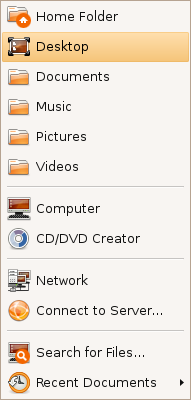
Before:

After:
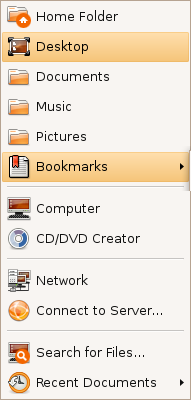
This menu shows now the 3 most used bookmarks and hides the rest under a submenu (instead of hiding all of them).
Shutdown/log out icon
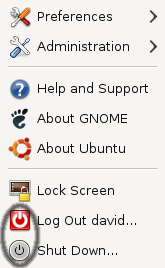

This is with the default Human theme on Intrepid. It should either stick with the red power off logo, or the grey one.
CD/DVD Creator
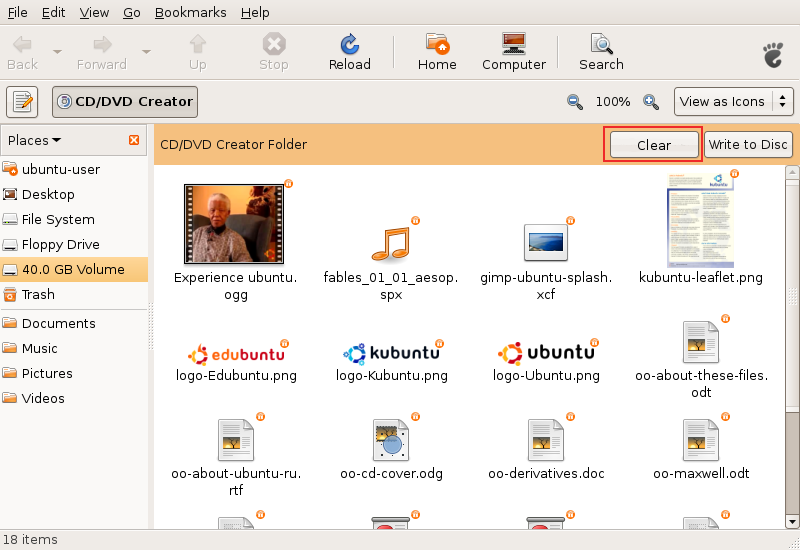
Added the "Clear" button. There should be also a message instructing the user and maybe a progress bar with the space occupied.
Response: Good idea! I started work on this: http://bugzilla.gnome.org/show_bug.cgi?id=520414
Same icons in all places
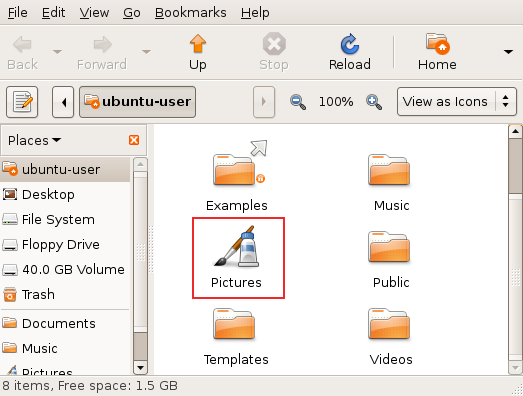
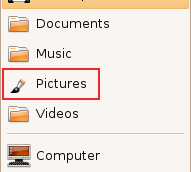
When the user changes the default icon of a folder (like shown in the first image), this change should be reflected under the Places menu (like shown in the second image). This behaviour is now inexistent.
Nautilus
Intelligent trash-bin
- Add an option to auto-purge elements older than X days
- Allow restoration of individual items or the entire trash bin to the locations they were in before they were moved to the trash
Context-sensitive emblems
- Nautilus should auto-detect the most common type of files inside a folder and attach an emblem accordingly (this feature is available in Konqueror)
Misc
- When opening a file for which only root has write permissions, the user should be prompted for the password to enable writing to it. The user would of course have the option to supply no password, in which case the file will remain read-only. Similarly, if only root has read permissions, the user is notified and offered a password prompt to allow them to read the file.
LittleDetails (last edited 2012-01-23 08:00:25 by 230-55-139-94)