DeveloperStackTour
|
Size: 19354
Comment:
|
Size: 19322
Comment:
|
| Deletions are marked like this. | Additions are marked like this. |
| Line 133: | Line 133: |
| (talk about the gwibber API) |
Ubuntu Developer Stack
As part of the 10.10 plan I am keen to provide a simple tour of the Ubuntu developer stack, providing a rock solid tour of what opportunities the stack offers for developers on the platform. This will be structured as a list of the common components in the developer stack, each of which links to a page which provides a common structure with key information about that component.
To get the ball rolling I have produced this common structure and documented an initial set of components, but need help to flesh out the content to get it ready.
When editing content please bear the following rules in mind:
- The writing style should be clear and easy to read.
- The style should be attractive and excited about the technology - the goal here is to "sell" the platform to developers.
- This content is targeted at developers, so feel free to use developer terms, but don't assume the reader knows anything about the technology.
- Please keep your content within the structure of the Structure section below.
Please don't add additional components to this page yet.
Any questions? Email Jono Bacon at jono AT ubuntu DOT com.
Structure
<screenshot of an application using this technology - make sure to use the standard Ambiance dark theme and include the window borders - 800px wide>
Caption that explains what the app is in the screenshot.
First provide a 20 world bolded out description that summarizes the technology and really grabs the user.
Now provide two paragraphs of more detailed content about what the technology can be used for. Lorem ipsum dolor sit amet, consectetur adipiscing elit. Duis interdum metus sed odio aliquet mollis. Pellentesque imperdiet suscipit dui vitae tincidunt. Donec a iaculis enim. Morbi pharetra vestibulum facilisis. Pellentesque egestas aliquam eros, eget blandit odio malesuada varius. Donec dolor nibh, elementum ac dignissim a, sagittis sed dui. Class aptent taciti sociosqu ad litora torquent per conubia nostra, per inceptos himenaeos. Nam nec turpis nibh, eu dapibus lectus.
Morbi adipiscing erat id felis elementum luctus. Nunc erat mi, aliquet sed pulvinar vel, lacinia ut nulla. Fusce id urna est. Duis luctus convallis turpis, et suscipit risus ultricies id. Proin ut lacinia nunc. In hac habitasse platea dictumst. Mauris blandit, eros sed ultrices ullamcorper, risus nibh condimentum lorem, at accumsan quam elit quis turpis.
Five reasons to care about <component>:
Feature name - no more than 50 words about the feature.
Feature name - no more than 50 words about the feature.
Feature name - no more than 50 words about the feature.
Feature name - no more than 50 words about the feature.
Feature name - no more than 50 words about the feature.
Find out more:
Resource name that links to a site - description of the resource.
Resource name that links to a site - description of the resource.
Resource name that links to a site - description of the resource.
Content
Content can be added below...
GStreamer
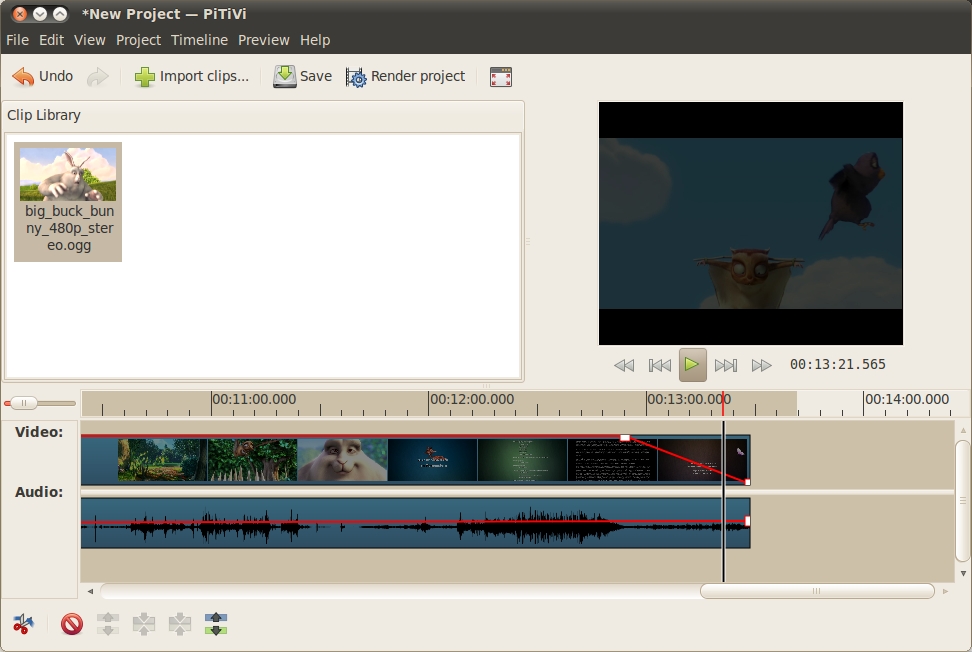
The PiTiVi non-linear digital video editor that ships in Ubuntu 10.04 is built using GStreamer technology.
A powerful toolkit for managing a wide variety of media and codecs for playback, recording, digital effects and more.
The powerful GStreamer framework provides a complete set of tools for managing multimedia. GStreamer provides a wide range of plugins that are connected together in a pipeline to offer unparalleled flexibility in how multimedia is processed in your application. Whether you want to produce a non-linear video editor, a multi-track audio recorder, a video processing tool, music streaming application or simply play back a sound, GStreamer has the flexibility you need.
GStreamer provides support for a range of container formats (asf, avi, webm, 3gp/mp4/mov, flv, mpeg-ps/ts, mkv, mxf, ogg), supporting both local decoding/encoding as well as streaming over the network. GStreamer is also at the heart of a number of other additional technologies such as Farsight for handling audio/video calls and GNonlin for producing non-linear editing support in your applications.
Five reasons to care about GStreamer:
Powerful Pipeline Creation - no matter how specialized your needs are, GStreamer can string together a wide range of different multimedia encoders/decoders and processors in exactly the way you need.
Comprehensive Codec Support - GStreamer support for all major local and streaming playback/recording codecs for both encoding and decoding.
Non Linear Support - GStreamer can be used to create non-linear editing support in applications with the GNonLin set of plugins. This can be seen in the PiTiVi (video editor) and Jokosher (audio multi-tracker) applications.
Network Syncing - GStreamer's network clocks provide a powerful method of multiple clients syncing to a server and synchronizing their playback perfectly for all clients.
Extensible - With GStreamer's plugin architecture, more and more plugins are being created all the time satisfy different multimedia needs.
Find out more:
Python GStreamer Tutorial - an introductory guide to getting started with GStreamer.
Python Documentation - reference documentation for the GStreamer Python bindings.
Python
(talk about the sheer flexibility of the python standard library and the many features it affords programmers)
<screenshot of an application using this technology - make sure to use the standard Ambiance dark theme and include the window borders - 800px wide>
Caption that explains what the app is in the screenshot.
First provide a 20 world bolded out description that summarizes the technology and really grabs the user.
Now provide two paragraphs of more detailed content about what the technology can be used for. Lorem ipsum dolor sit amet, consectetur adipiscing elit. Duis interdum metus sed odio aliquet mollis. Pellentesque imperdiet suscipit dui vitae tincidunt. Donec a iaculis enim. Morbi pharetra vestibulum facilisis. Pellentesque egestas aliquam eros, eget blandit odio malesuada varius. Donec dolor nibh, elementum ac dignissim a, sagittis sed dui. Class aptent taciti sociosqu ad litora torquent per conubia nostra, per inceptos himenaeos. Nam nec turpis nibh, eu dapibus lectus.
Morbi adipiscing erat id felis elementum luctus. Nunc erat mi, aliquet sed pulvinar vel, lacinia ut nulla. Fusce id urna est. Duis luctus convallis turpis, et suscipit risus ultricies id. Proin ut lacinia nunc. In hac habitasse platea dictumst. Mauris blandit, eros sed ultrices ullamcorper, risus nibh condimentum lorem, at accumsan quam elit quis turpis.
Five reasons to care about <component>:
Feature name - no more than 50 words about the feature.
Feature name - no more than 50 words about the feature.
Feature name - no more than 50 words about the feature.
Feature name - no more than 50 words about the feature.
Feature name - no more than 50 words about the feature.
Find out more:
Resource name that links to a site - description of the resource.
Resource name that links to a site - description of the resource.
Resource name that links to a site - description of the resource.
Ayatana
(talk about app indicators, notify-osd, messaging menu)
<screenshot of an application using this technology - make sure to use the standard Ambiance dark theme and include the window borders - 800px wide>
Caption that explains what the app is in the screenshot.
First provide a 20 world bolded out description that summarizes the technology and really grabs the user.
Now provide two paragraphs of more detailed content about what the technology can be used for. Lorem ipsum dolor sit amet, consectetur adipiscing elit. Duis interdum metus sed odio aliquet mollis. Pellentesque imperdiet suscipit dui vitae tincidunt. Donec a iaculis enim. Morbi pharetra vestibulum facilisis. Pellentesque egestas aliquam eros, eget blandit odio malesuada varius. Donec dolor nibh, elementum ac dignissim a, sagittis sed dui. Class aptent taciti sociosqu ad litora torquent per conubia nostra, per inceptos himenaeos. Nam nec turpis nibh, eu dapibus lectus.
Morbi adipiscing erat id felis elementum luctus. Nunc erat mi, aliquet sed pulvinar vel, lacinia ut nulla. Fusce id urna est. Duis luctus convallis turpis, et suscipit risus ultricies id. Proin ut lacinia nunc. In hac habitasse platea dictumst. Mauris blandit, eros sed ultrices ullamcorper, risus nibh condimentum lorem, at accumsan quam elit quis turpis.
Five reasons to care about <component>:
Feature name - no more than 50 words about the feature.
Feature name - no more than 50 words about the feature.
Feature name - no more than 50 words about the feature.
Feature name - no more than 50 words about the feature.
Feature name - no more than 50 words about the feature.
Find out more:
Resource name that links to a site - description of the resource.
Resource name that links to a site - description of the resource.
Resource name that links to a site - description of the resource.
Social From The Start
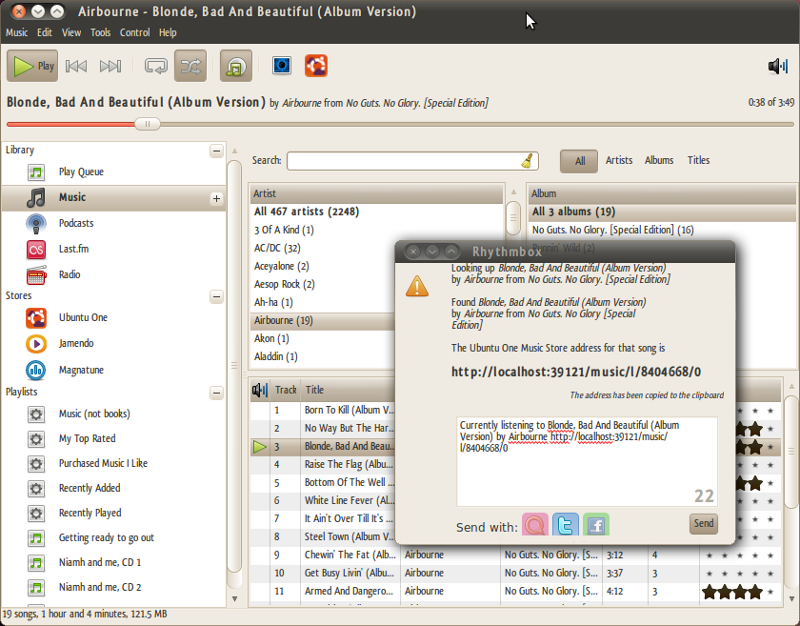 Rhythmbox's UbuntuOne music store plugin showing retrieving a music store URL for a song in your library, and sharing it with your social network.
First provide a 20 world bolded out description that summarizes the technology and really grabs the user.
Now provide two paragraphs of more detailed content about what the technology can be used for. Lorem ipsum dolor sit amet, consectetur adipiscing elit. Duis interdum metus sed odio aliquet mollis. Pellentesque imperdiet suscipit dui vitae tincidunt. Donec a iaculis enim. Morbi pharetra vestibulum facilisis. Pellentesque egestas aliquam eros, eget blandit odio malesuada varius. Donec dolor nibh, elementum ac dignissim a, sagittis sed dui. Class aptent taciti sociosqu ad litora torquent per conubia nostra, per inceptos himenaeos. Nam nec turpis nibh, eu dapibus lectus.
Morbi adipiscing erat id felis elementum luctus. Nunc erat mi, aliquet sed pulvinar vel, lacinia ut nulla. Fusce id urna est. Duis luctus convallis turpis, et suscipit risus ultricies id. Proin ut lacinia nunc. In hac habitasse platea dictumst. Mauris blandit, eros sed ultrices ullamcorper, risus nibh condimentum lorem, at accumsan quam elit quis turpis.
Five reasons to care about <component>:
Feature name - no more than 50 words about the feature.
Feature name - no more than 50 words about the feature.
Feature name - no more than 50 words about the feature.
Feature name - no more than 50 words about the feature.
Feature name - no more than 50 words about the feature.
Find out more:
Resource name that links to a site - description of the resource.
Resource name that links to a site - description of the resource.
Resource name that links to a site - description of the resource.
PyGTK
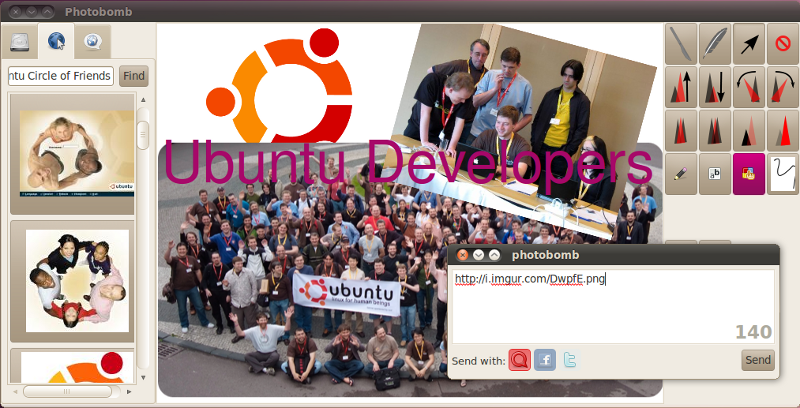
Photobomb undergoing development, using PyGtk for all the features you see here.
PyGtk is the GUI toolkit that Ubuntu Developers use to create Ubuntu Applications.
PyGtk combines the ease of the Python language with the power of the Gtk GUI Toolkit. PyGtk has widgets for creating windows, dialogs, buttons, toolbars, sliders, text entry fields, everything you could need to create an application for your users. PyGtk also works with advanced controls like GooCanvas for rocking a freeform 2d surface, and allows you to dive down into Pango or gdk if you want to push your app to the limit. PyGtk comes with Glade, a UI designer that makes it fast and easy to lay out you applications GUI.
Quickly Widgets is a package of widgets built on top of PyGtk that make it easy to quickly add core functionality to your application. These widgets include things like grids for displaying data, web cam widgets, a media player widget, and prompts for getting input from users.
Five reasons to care about PyGtk:
Powerful Layout Editor - Glade is the UI designer that makes creating GUIs fast.
Complete Widget Toolkit - PyGtk and Quickly Widgets deliver all the GUI Widgets needed to create any application.
Desktop Integration - Native widgets make your app look and act like a real part of the desktop.
Find out more:
Using Glade - manual chapter.
Using PyGtk with quickly - more manual chapters.
PyGtk Library Reference - Online reference deep divers into each widget and related classes.
Desktop Couch
(talk about the benefits of putting data in desktop couch, replication benefits, Ubuntu One etc)
<screenshot of an application using this technology - make sure to use the standard Ambiance dark theme and include the window borders - 800px wide>
Caption that explains what the app is in the screenshot.
First provide a 20 world bolded out description that summarizes the technology and really grabs the user.
Now provide two paragraphs of more detailed content about what the technology can be used for. Lorem ipsum dolor sit amet, consectetur adipiscing elit. Duis interdum metus sed odio aliquet mollis. Pellentesque imperdiet suscipit dui vitae tincidunt. Donec a iaculis enim. Morbi pharetra vestibulum facilisis. Pellentesque egestas aliquam eros, eget blandit odio malesuada varius. Donec dolor nibh, elementum ac dignissim a, sagittis sed dui. Class aptent taciti sociosqu ad litora torquent per conubia nostra, per inceptos himenaeos. Nam nec turpis nibh, eu dapibus lectus.
Morbi adipiscing erat id felis elementum luctus. Nunc erat mi, aliquet sed pulvinar vel, lacinia ut nulla. Fusce id urna est. Duis luctus convallis turpis, et suscipit risus ultricies id. Proin ut lacinia nunc. In hac habitasse platea dictumst. Mauris blandit, eros sed ultrices ullamcorper, risus nibh condimentum lorem, at accumsan quam elit quis turpis.
Five reasons to care about <component>:
Feature name - no more than 50 words about the feature.
Feature name - no more than 50 words about the feature.
Feature name - no more than 50 words about the feature.
Feature name - no more than 50 words about the feature.
Feature name - no more than 50 words about the feature.
Find out more:
Resource name that links to a site - description of the resource.
Resource name that links to a site - description of the resource.
Resource name that links to a site - description of the resource.
Quickly
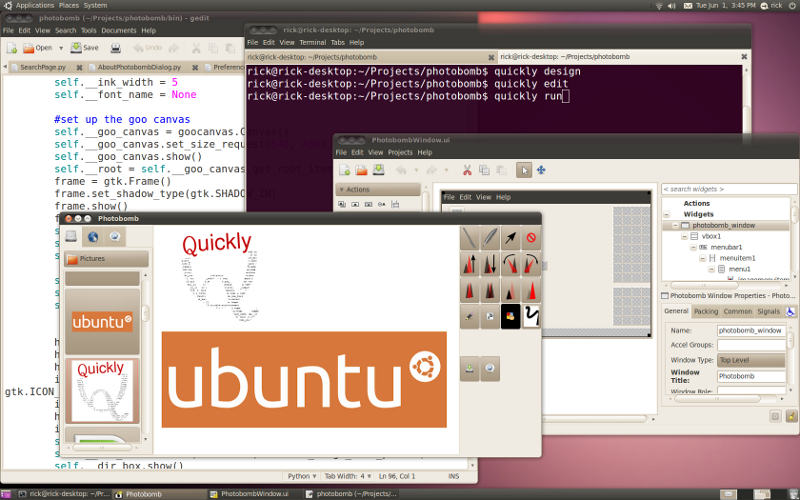
Interactive applications like Photobomb can be created using Quickly.
Quickly is the tool that pulls together everything you need to make it easy and fun to write an app on Ubuntu.
Quickly integrates project creation, code editing, GUI editing, running and debugging, as well as packaging and sharing via Launchpad.net, all in one easy to use command line interface. Quickly generates your project ready to run with everything you need for a complete Ubuntu Application. Quickly also comes with great tutorials and a great community of developers to help you create whatever applications you can imagine.
Quickly is not an IDE. Rather, Quickly works by first choosing the right technologies for creating the kind of project you want to create for Ubuntu. And then it integrates those choices into the desktop and into Launchpad.net for you, all controlled with a few easy commands. Quickly has templates to help you create a Ubuntu application, a command line application, and a game, with more templates being created all the time.
Five reasons to care about <component>:
An Easy Choice - When you start an application with Quickly, all the hard decisions have been made.
Easy and Fun Application Generation - When you write an application with Quickly, all the boiler plate has been written for you.
Packaging and Sharing - Quickly applications are super easy to package and distribute.
Help - Quickly comes with tutorials and detailed help, and there is even a #quickly irc channel.
Find out more:
Resource name that links to a site - description of the resource.
Resource name that links to a site - description of the resource.
Resource name that links to a site - description of the resource.
Telepathy
(talk about what Telepathy can do for connecting multiple protocols, audio/video calls etc)
<screenshot of an application using this technology - make sure to use the standard Ambiance dark theme and include the window borders - 800px wide>
Caption that explains what the app is in the screenshot.
First provide a 20 world bolded out description that summarizes the technology and really grabs the user.
Now provide two paragraphs of more detailed content about what the technology can be used for. Lorem ipsum dolor sit amet, consectetur adipiscing elit. Duis interdum metus sed odio aliquet mollis. Pellentesque imperdiet suscipit dui vitae tincidunt. Donec a iaculis enim. Morbi pharetra vestibulum facilisis. Pellentesque egestas aliquam eros, eget blandit odio malesuada varius. Donec dolor nibh, elementum ac dignissim a, sagittis sed dui. Class aptent taciti sociosqu ad litora torquent per conubia nostra, per inceptos himenaeos. Nam nec turpis nibh, eu dapibus lectus.
Morbi adipiscing erat id felis elementum luctus. Nunc erat mi, aliquet sed pulvinar vel, lacinia ut nulla. Fusce id urna est. Duis luctus convallis turpis, et suscipit risus ultricies id. Proin ut lacinia nunc. In hac habitasse platea dictumst. Mauris blandit, eros sed ultrices ullamcorper, risus nibh condimentum lorem, at accumsan quam elit quis turpis.
Five reasons to care about <component>:
Feature name - no more than 50 words about the feature.
Feature name - no more than 50 words about the feature.
Feature name - no more than 50 words about the feature.
Feature name - no more than 50 words about the feature.
Feature name - no more than 50 words about the feature.
Find out more:
Resource name that links to a site - description of the resource.
Resource name that links to a site - description of the resource.
Resource name that links to a site - description of the resource.
DeveloperStackTour (last edited 2010-10-12 17:48:03 by pool-98-110-175-166)